G3DP3
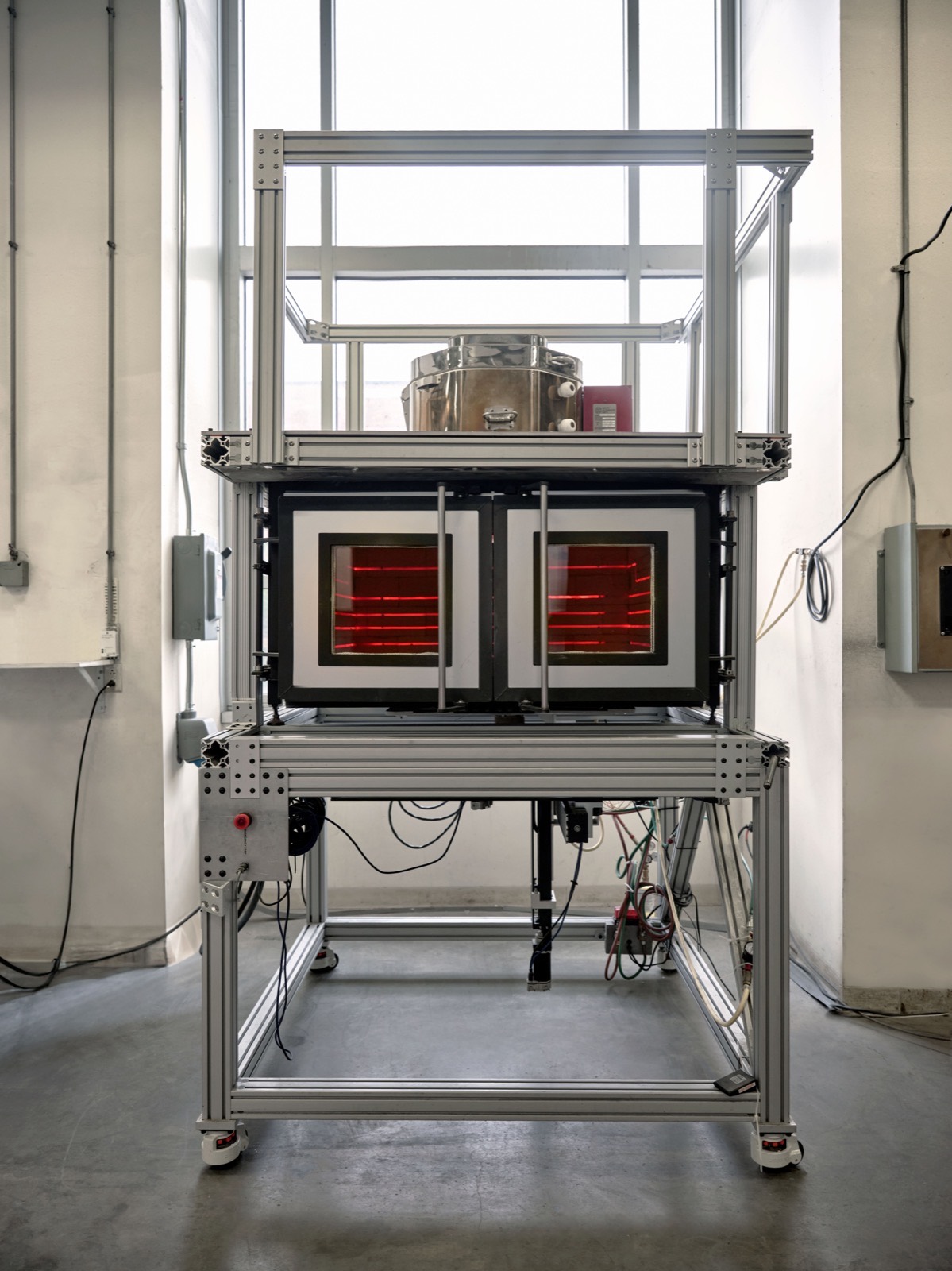
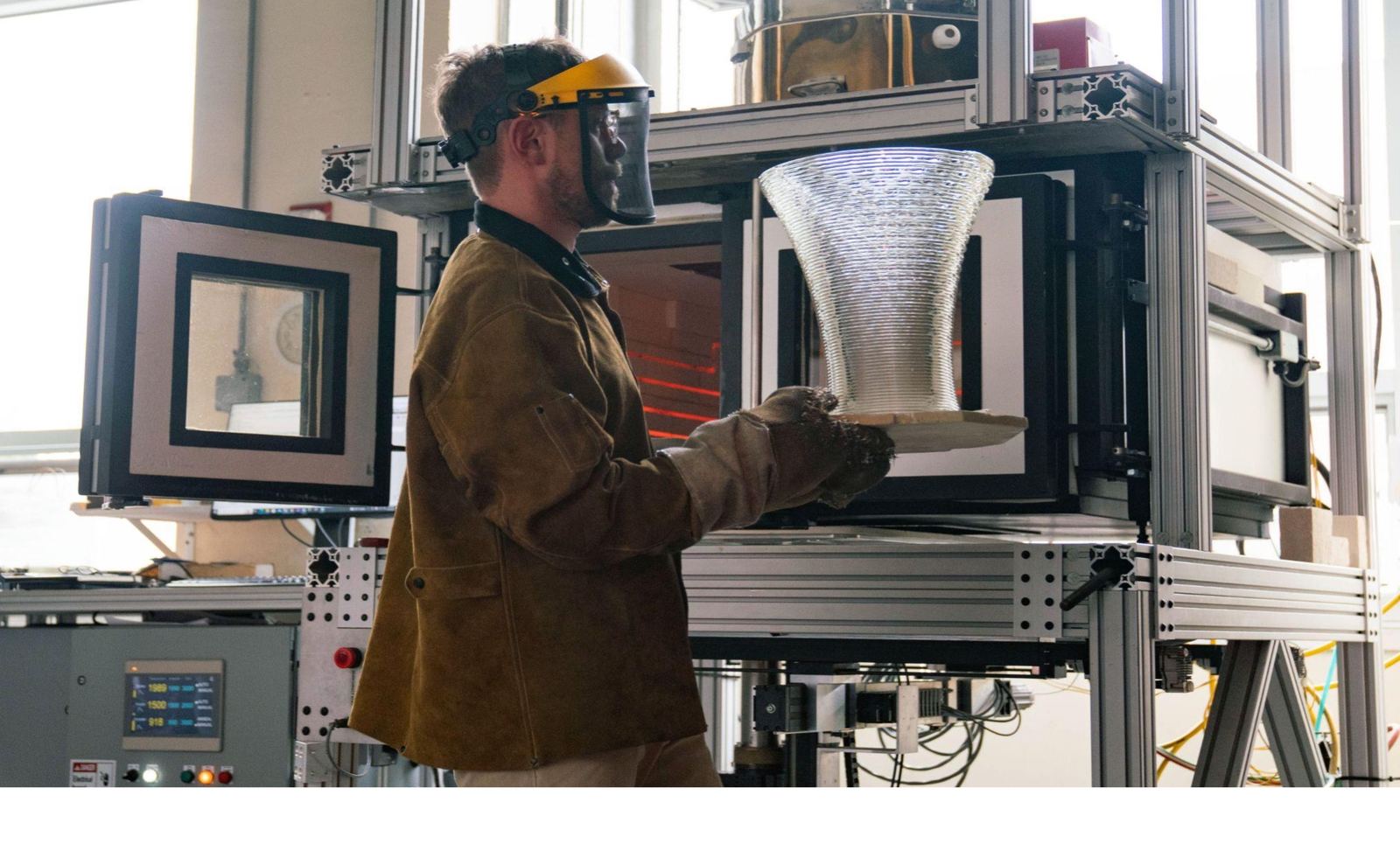
The current generation of the molten-glass printer, running at Evenline. Updated software brings embedded image programming, and polar-coordinate printing extends the working envelope to a 469 mm diameter. A redesigned refractory package improves the printer's uptime more than fivefold, the printable thickness range has widened, and new material process parameters open printing with float glass and recycled bottle glass — Sapphire among many other options — with improved visualization throughout.
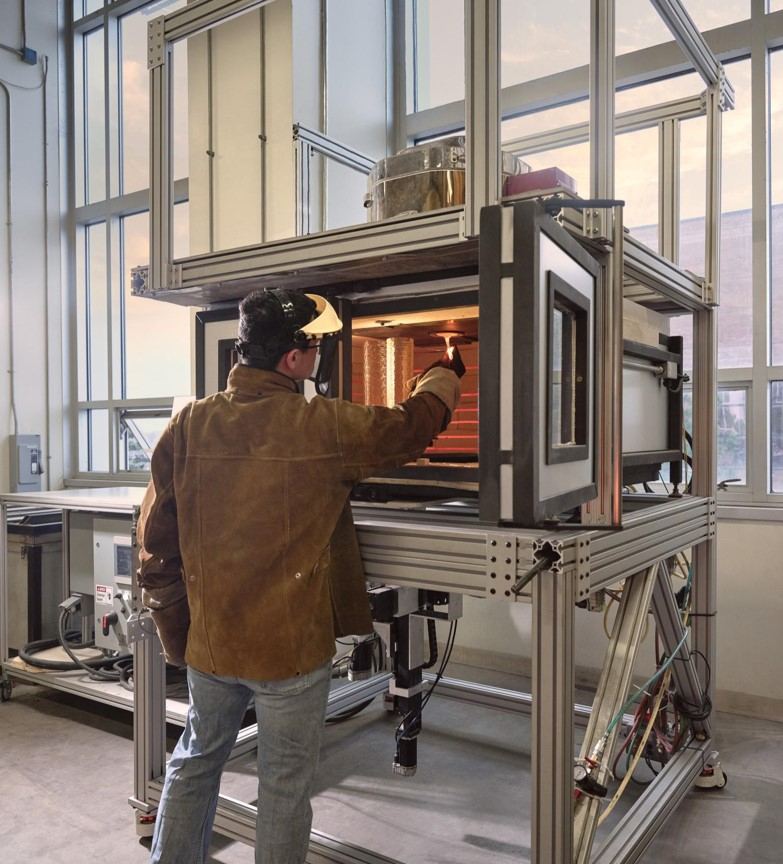
Three generations on from the machine that proved the method, G3DP3 is rebuilt around the image: gray values program the print directly, and a polar motion system draws in radius and angle rather than X and Y. The refractory redesign keeps the furnace serviceable — uptime increased more than 5× — and the widened process window admits float glass and post-consumer bottle cullet alongside studio glass.
It starts with a machine I helped invent. The molten-glass printer holds glass at working temperature and lays it down, one line at a time, through a nozzle of alumina, zircon, and silica. The only state you can print is molten — honey-thick, and only just willing to move. I write a radius and a speed, then I step back.
Every piece begins as a few lines of g-code: where to go, how fast, how hot. Move one number and the whole landscape changes. Then the kiln takes over. The print anneals for up to ninety-six hours. Slow enough to release the stress of being made. Glass carries its past. Every heat, every touch stays within its form.