Radial Landscape
A perfect circle interpreted by time and material. Each of these objects is made with one line of code, simply telling the machine to spin. Molten glass interprets that one line and builds upon it. I see patterns emerge in the glass, both large and small. Each time I sink into this work, I find something new.
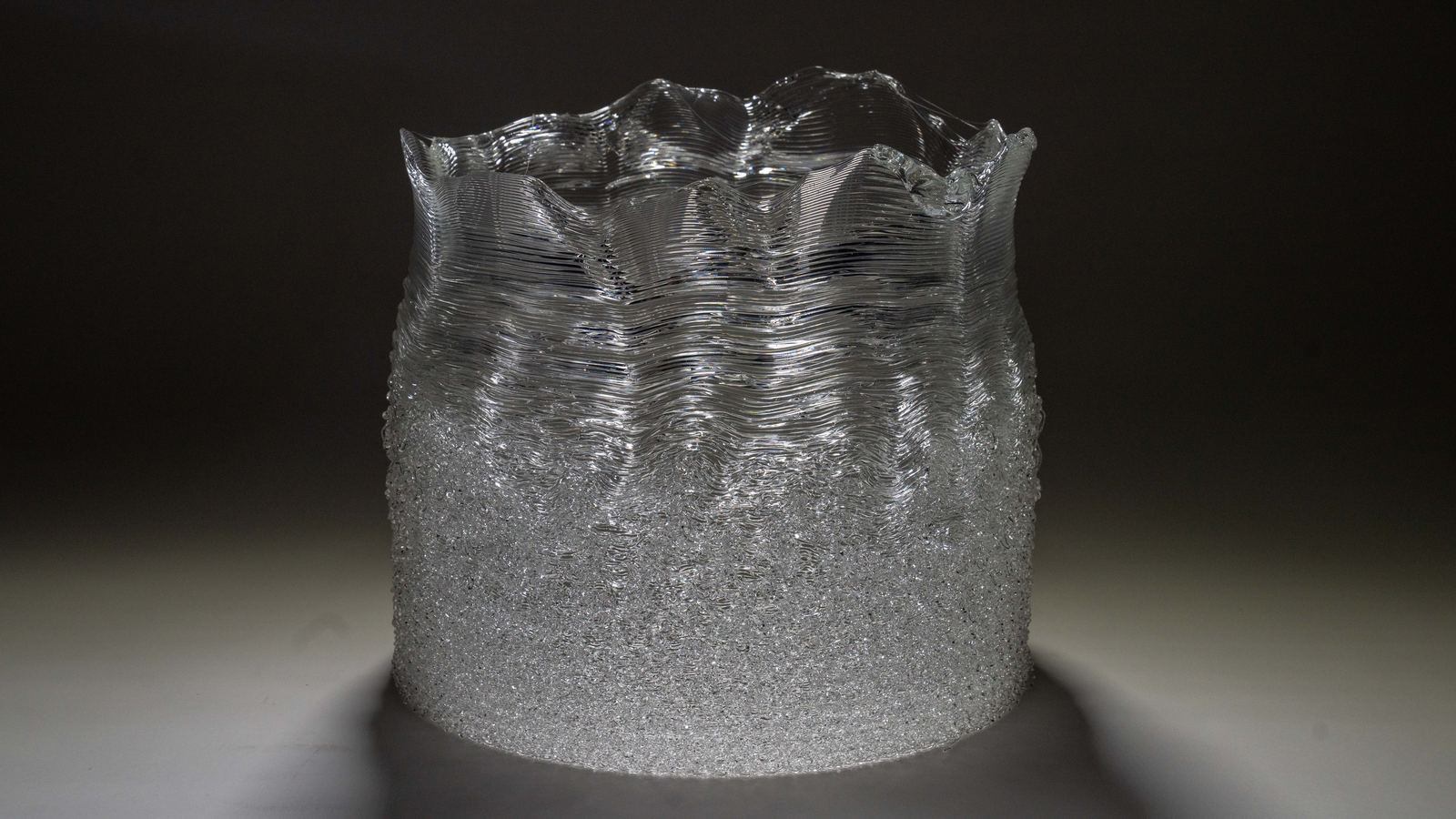
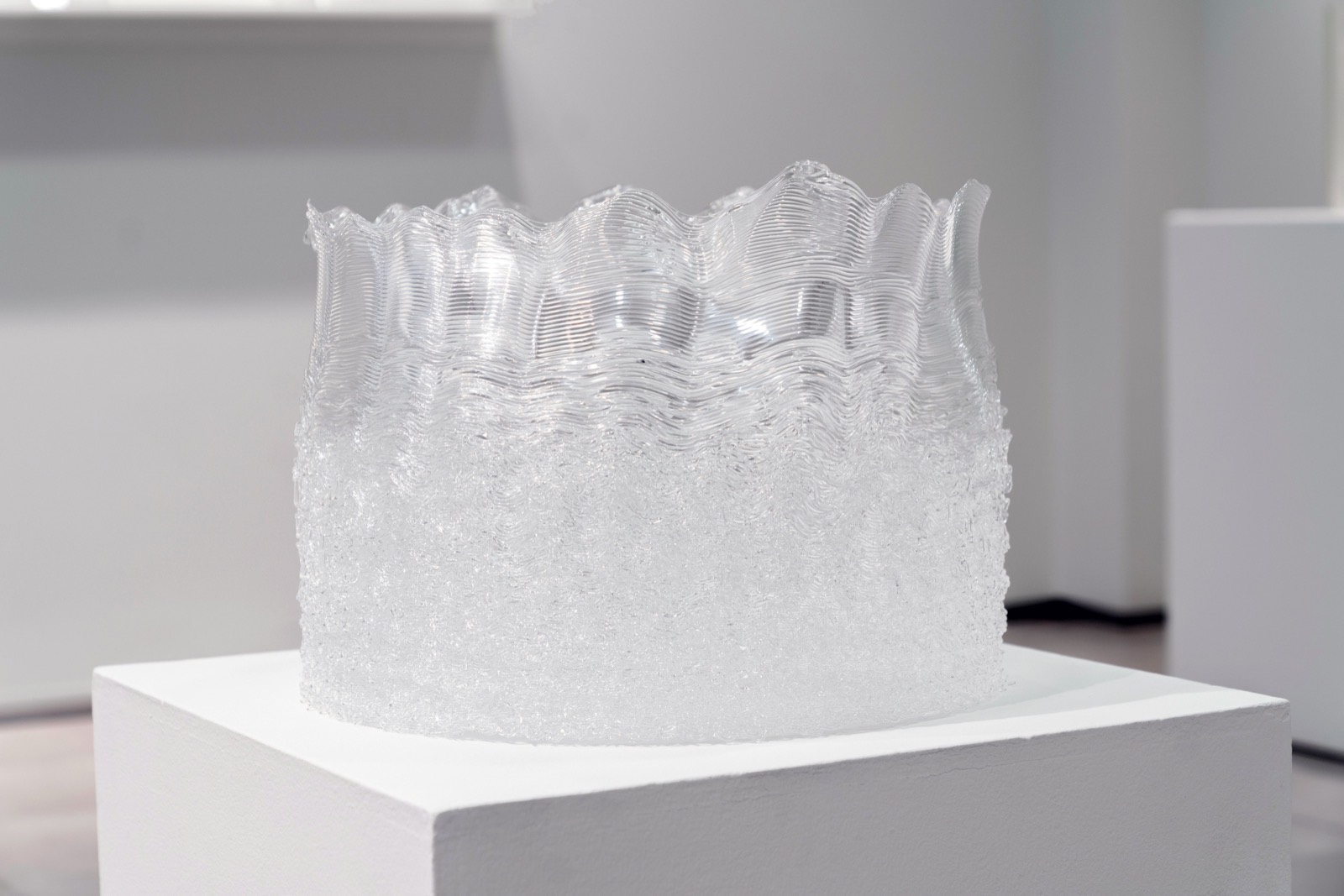
What's possible from a single line of code? The results are compelling, unexpected, and more complex than many of the programmed artworks I've made. Each object is a reflection of glass in its molten state, dependent on the variables of temperature and the unique behaviors of different glass bodies.
The whole drawing is a single instruction — a radius and a speed, telling the machine to spin. Gravity and heat interpret it from there.
G2 I-120 J0 F90 ; one circle, interpreted by time
The printer holds glass at more than 2000°F. It flows out through a ceramic nozzle, one line at a time. I write the path it follows: where to go, how fast, how hot. The nozzle traces that path, leaving a bead of glass behind it, and the object grows layer by layer.
When a print is done, we cut it free from the stream. It comes off the machine close to 900°F and goes into another chamber to cool overnight.
None of this replaces glassblowing. It builds on it. People have been forming glass for thousands of years. This is one more way to do it: material, machine, and the person running both.